
A steady increase in women´s work force participation characterizes the employment scenario in India today. Out of 455.7 million workforce (all ages) women workers numbered 146.9 million, which is 32 per cent of the entire workforce.
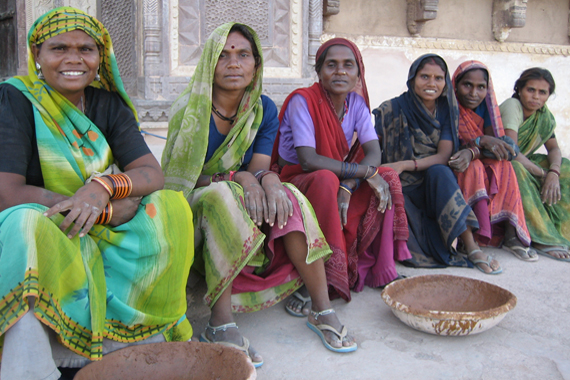
The growth rate of female workers has been much greater than men in the period between 1999/2000 to 2004/2005 and women´s growing participation was notable in urban sectors such as manufacturing and services. The gender dimension of growth over the last decades has promoted policy makers and researchers to take a deeper look into the policy environment of women´s work.
The eleventh five year plan document recognizes women not only as equal citizens, but as “agents of sustained socio-economic growth and change” (GOI, 2008, p.5). A multi-pronged approach is India has many milestones as the national policy and institutional level that relate to promoting women´s autonomy, empowerment and rights as workers. Recent developments include the “gendering” of policy and budgetary process with the “Women´s Component Plan” which was first initiated in the Seventh Five Year Plan and actively taken forward by the Ninth Five Year Plan (1997-2002). In line with the development plans, the Indian Government has launched various programmes and schemes for women with differential outreach and impact on their lives. The programmes and schemes range from health, nutrition, education, employment generation, widow pensions, micro finance, housing and so on.X
Objectives:
The study through qualitative and quantitative methods would analyse the impact of the different govt. policies/schemes in promoting and safeguarding women’s work force participation in the state of Uttar Pradesh (U.P.). This will also throw light on the best practices adopted in the selected four districts of UP for ensuring large-scale economic participation of women in the state and how to converge the central/state level policies for the betterment of women work-force participation by taking into consideration their time, pace and responsibilities within the household. In order to achieve these, the study will have the following objectives:
- To identify available central and state level schemes and their characteristics e.g. mandate, eligibility and provisions
- To identify the extent of awareness of the schemes among the beneficiaries
- To explore whether the schemes together provide a balanced support towards women’s multiple roles and needs in terms of health, shelter, income, access to credit, skills, reducing drudgeries, household service work etc.
- To locate the maximum intended capacity of each scheme and examine how far each of the schemes are accessible to its beneficiaries (in terms of number of beneficiaries)
- To categorize the profile of women who benefit the most and the least form the schemes (e.g. dalit women, women in agriculture, widows, women with skills/ capital, women employed in NREGA etc.)
- To examine whether the schemes enable women to engage in productive work
- To identify the strengths and weaknesses of the schemes from a women and work perspective
- To identify the type of indicators (process and impact) that would best track the effectiveness of the schemes in enabling women to access gainful employment
- To assess the potentiality of improvement and convergence of the schemes for enabling women of working age so that they are engaged in meaningful employment
To address this chosen methodology includes not only primary data collection and field visits, but also, secondary data coupled with interviews with key informants and six Focus Group Discussions (FGDs) in each of the selected four districts with similar socio-economic profile of the state of Uttar Pradesh. After mapping of various available schemes, a scheme matrix was developed to analyse the results of FGDs, responses from key informants and policy provisions for betterment of women’s work force participation.